

New Owner
2 min to read
Routine Health Care for Your Thoroughbred
Learn how to build a practical preventative care plan for your Thoroughbred, covering hooves, teeth, vaccinations, parasites and records.
New Owner
The Beyond the Track Transition Assessment supports owners to make informed, welfare-focused decisions about the future of Thoroughbreds transitioning from racing, breeding, or other industry activities.
Every Thoroughbred is different. Age, health, temperament, previous experience, and individual circumstances can all influence which pathway is most appropriate.
The assessment considers each horse as an individual and helps identify the level and type of support that may be required for a successful transition. Depending on the horse, this may include retraining for a second career, rehoming, rehabilitation, a companion or retirement home, or other appropriate welfare outcomes.
The assessment also helps connect eligible horses and owners with NZTR-recognised providers and relevant welfare and aftercare programmes.
ASSESSMENT CONSIDERATIONS
Every Thoroughbred is different. The assessment considers the horse’s history, current condition, behaviour and future needs.
Key considerations include:
These considerations help identify the most suitable pathway for each horse, based on its individual needs, capabilities and long-term welfare.
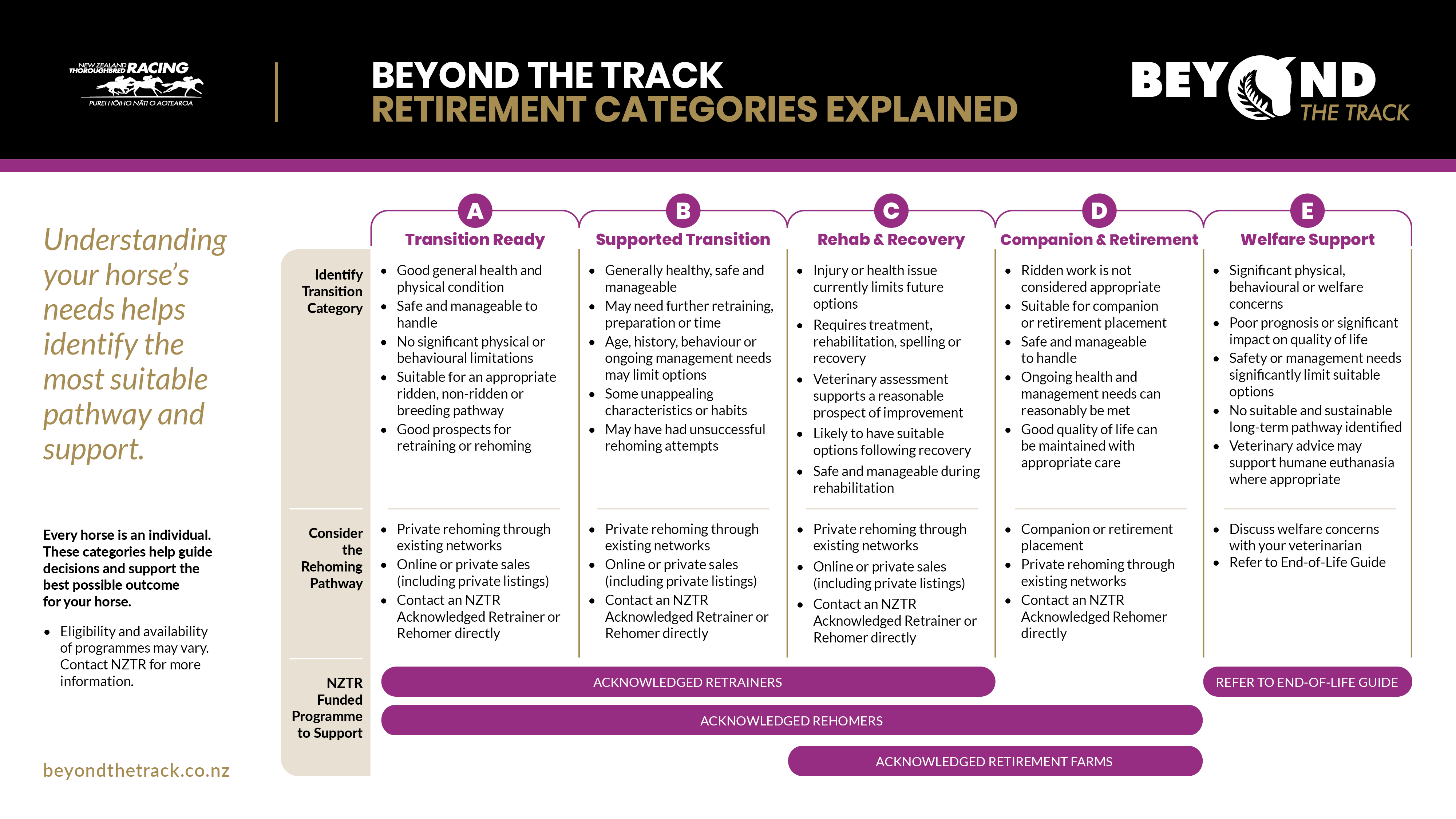
The horse is considered suitable to transition into an appropriate new home, role, or retraining pathway without significant additional support.
The horse is suitable for transition but may benefit from additional time, retraining, promotion, or other support to secure an appropriate long-term placement.
The horse has a physical or other identified need that should be addressed before progressing to an appropriate retraining, rehoming, or retirement pathway.
A non-ridden pathway is considered most appropriate for the horse, with suitable options potentially including breeding, companion placement or long-term retirement.
The horse has significant physical, behavioural, or welfare needs requiring further assessment and an individual welfare plan. This may include veterinary intervention and, where appropriate, consideration of humane euthanasia in consultation with a veterinarian.
Share
Email
New Owner
2 min to read
Learn how to build a practical preventative care plan for your Thoroughbred, covering hooves, teeth, vaccinations, parasites and records.

New Owner
7 min to read
Learn how to help an off-the-track Thoroughbred settle, adjust diet and work, build confidence, and recognise when professional support may help.

New Owner
6 min to read
Learn more about your Thoroughbred’s racing history, gather useful care insights and focus on the horse they are today.